2021:
A NUMBER, A PLAN, & A PUSH
|
|
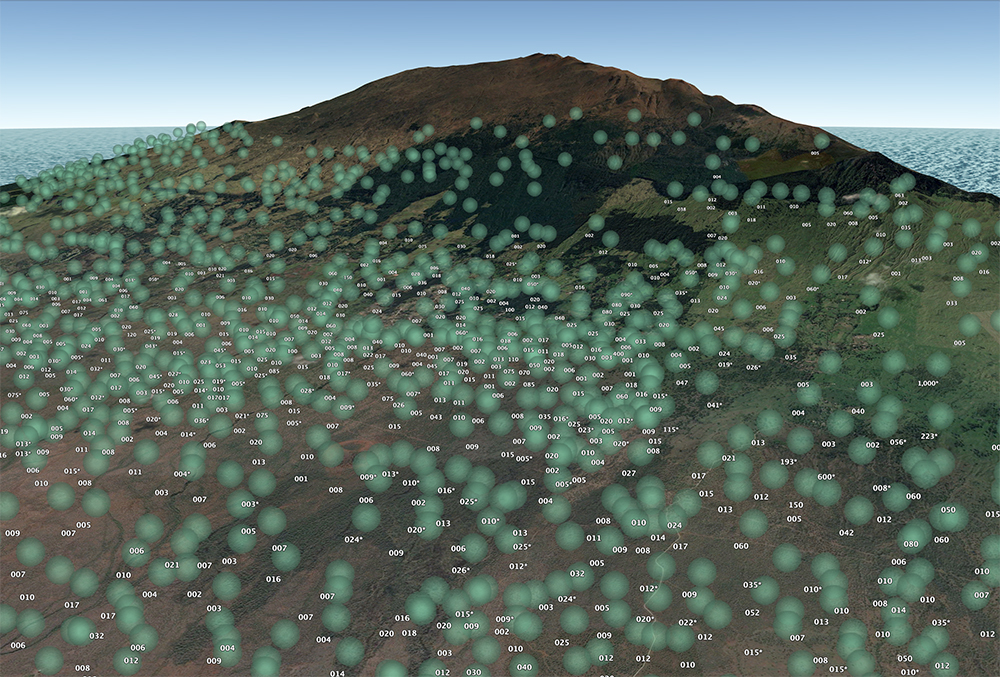
After our county-funded survey in early 2021, we finally had a real number, our first comprehensive estimate of how many Axis deer were on Maui:
|
|
just over 43,000 deer in the core range between Haʻikū and ʻUlupalakua. Our broader estimate put the island-wide population at more than 60,000 animals.
|
|
2021 Survey, Axis deer location and abundance.
|
|
I remember feeling two things when the data came back. First, reassurance. After years of studying Axis deer population dynamics and modeling reproductive rates, our estimates had landed in the ballpark of definitive deer numbers. Having the data match what we had projected for so long gave us real confidence.
Alongside reassurance, there was also disappointment.
Part of me had hoped the math was wrong, that maybe, after six years of long nights, the numbers would come in lower. But the math and science were clear, we were still years away from balance.
|
|
That clarity, though, was oddly calming. Now we knew exactly what had to happen next.
|
|
After years of seeking county, state, and federal support with limited success, it had become clear that meaningful public funding wasn't coming in time. The problem was compounding too quickly and we couldn't wait for a bureaucratic solution.
That's when we met an extraordinary group of early investors who believed deeply in both our product and mission. They understood we were building a system that could help balance Axis deer populations while supporting local ecosystems, communities, and customers. They also believed that building a meaningful business rooted in balance could deliver real impact and returns.
Their support gave us what we needed to get to work.
|
|
2021 Impact: 3,845 deer harvested | FLIR survey confirms 60,000+ deer island-wide | Population modeling validated | Funding to scale
|
|
2022:
BUILDING FAST & LEARNING TO LEAD
|
|
With funding in place, we moved quickly.
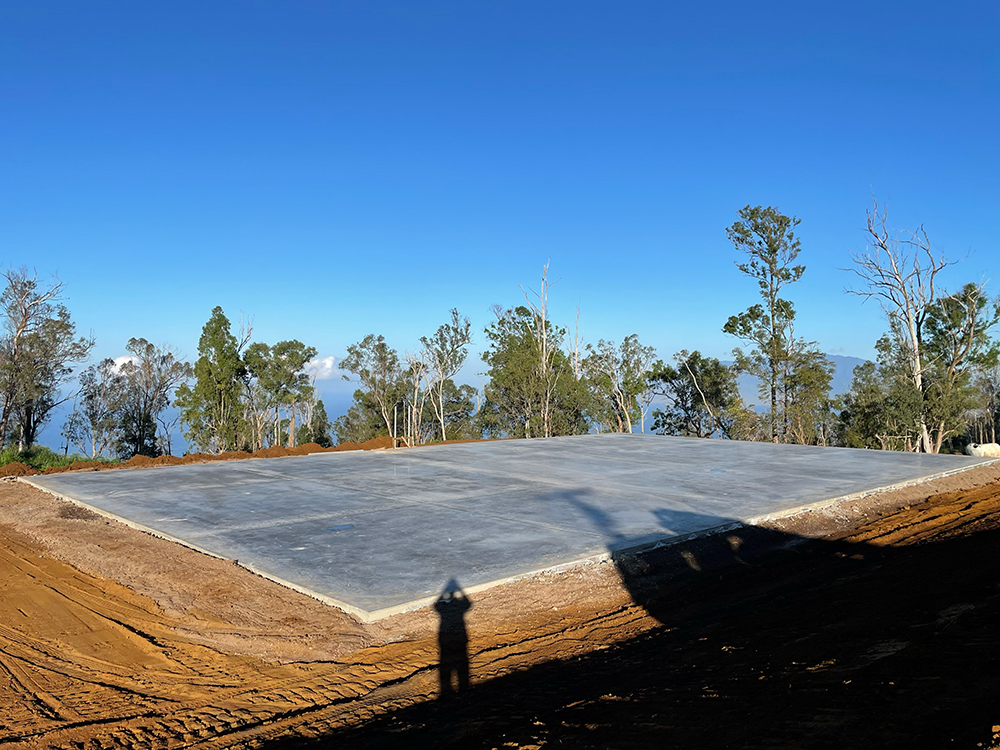
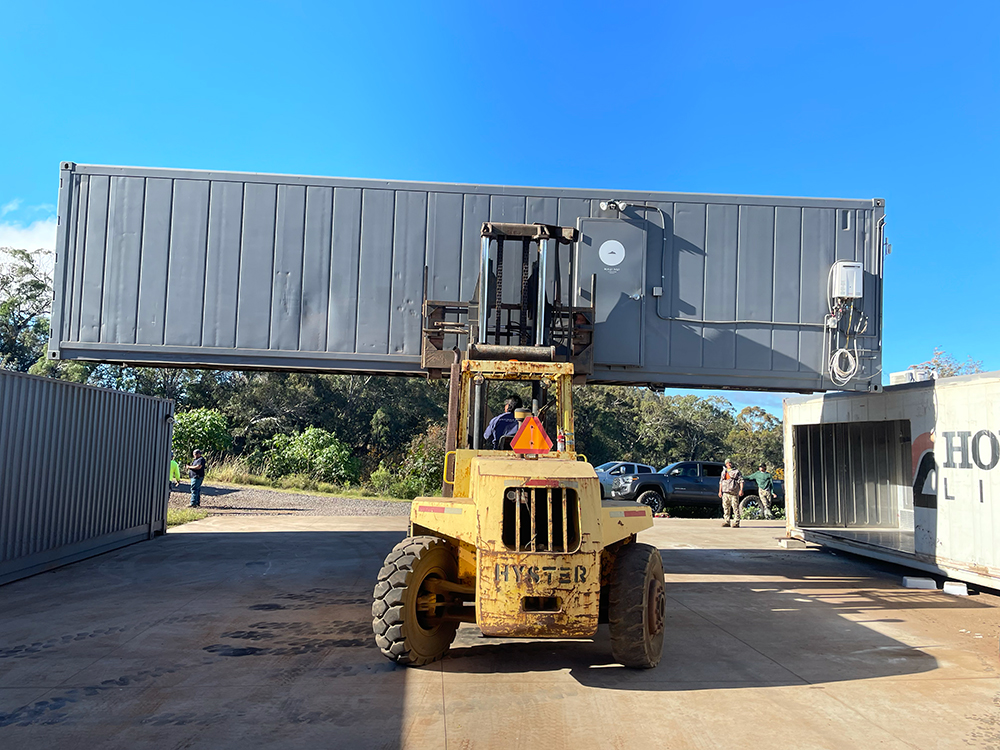
We started building a new baseyard with the steadfast support of ʻUlupalakua Ranch and the Erdman ʻOhana, allowing us to process all deer on-island. We harvested all night, and during the day, the same crew built the infrastructure that would support our future.
|
|
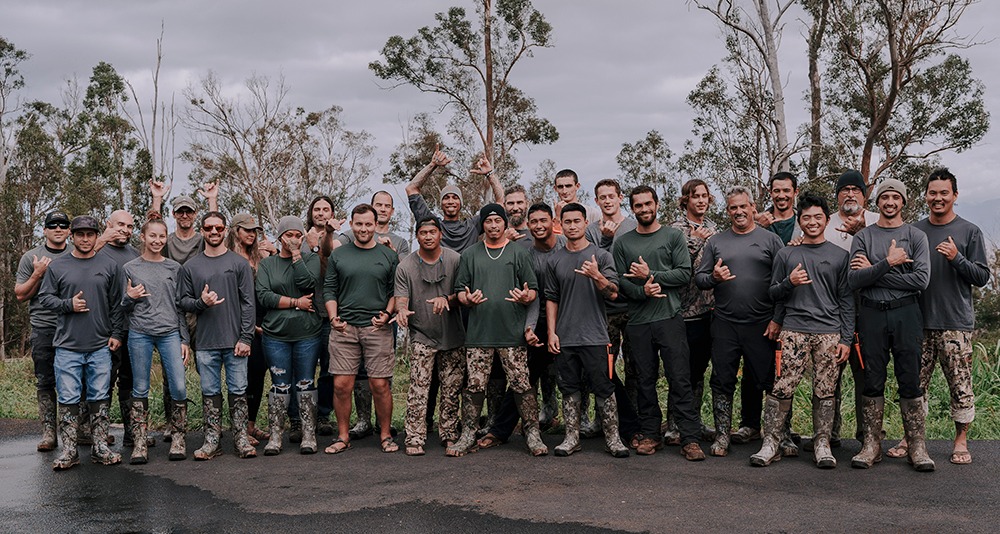
We went from a team of 5 to over 30 in less than ten months. We hired carefully, trained slowly, and worked hard to shape the culture we knew we'd need for long term success.
|
|
A brand new baseyard and a growing team.
|
|
And we did it all during ongoing COVID shutdowns, supply chain delays, and skyrocketing costs, while also trying to find enough customers who understood the value of our mission and products.
A significant personal lesson learned in 2022 was having to stop harvesting so I had more time to work on hiring, leading, and making day-to-day decisions as CEO. Building a strong culture for our teams became the biggest unlock to date.
Things began to click and we had a great year, harvesting 3x the number of deer than in 2021 and processing every single pound on Maui.
|
|
2022 Impact: 11,395 deer harvested | New baseyard completed with full processing capacity | Team grew from 5 to 30+
|
|
2023:
OPTIMIZING THE SYSTEM & SERVING COMMUNITY
|
|
In 2023, we maintained pace with 11,123 deer harvested. The systems held, the team matured, and the rhythm of harvest, processing, and fulfillment began to feel normal for the first time in years.
This was also the year our Holo ʻAi Food-Sharing Program became something bigger than we'd imagined.
We launched Holo ʻAi during COVID with the stark realization that if the planes and boats ever stopped coming in, Hawaiʻi would run out of food in just a few days. This incredible wild protein was already here, we just needed a better system for community access.
|
|
We had the intent to grow food-sharing, but intent and capacity are two very different things.
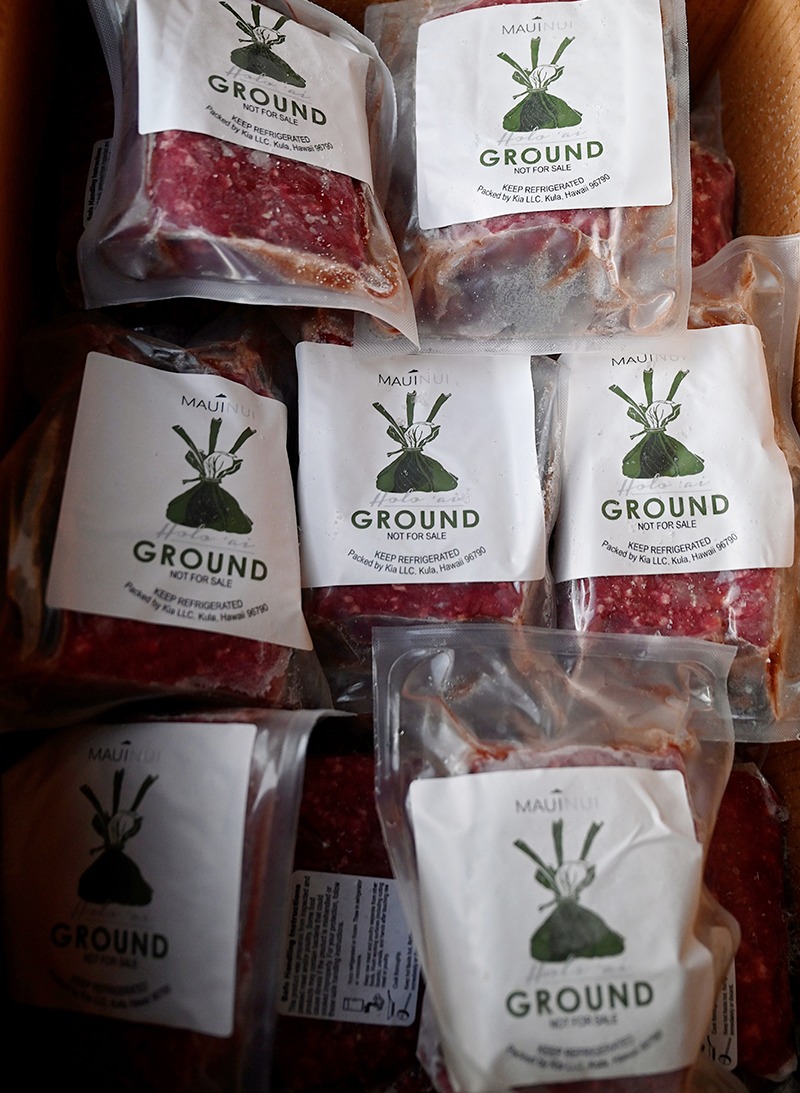
Two and a half years in, we had to learn how to share in more meaningful ways. Better processing helped us go from sharing quartered deer directly to the Food Bank to being able to share 1lb ground venison packs to a variety of feeding groups and partners.
|
|
|
|
In August, when the Lāhainā fires devastated the west side of Maui, we were ready.
We will never forget the feeling of that night, standing in ʻUlupalakua and staring out at the glow of the fires behind the West Maui Mountains. As community members and as food producers we knew exactly what we needed to do to be useful in the days, months and years ahead. We immediately operationalized an unprecedented level of food-sharing through Holo ʻAi, one that could be sustained indefinitely.
In crisis, I think that's all you can hope for—the means to help—and we were grateful we had built something that could respond at scale.
|
|
2023 Impact: 11,123 deer harvested | Rapid Holo ʻAi response after Lāhainā fires | 245,000+ meals served
|
|
2024:
SEEING IN REAL TIME
|
|
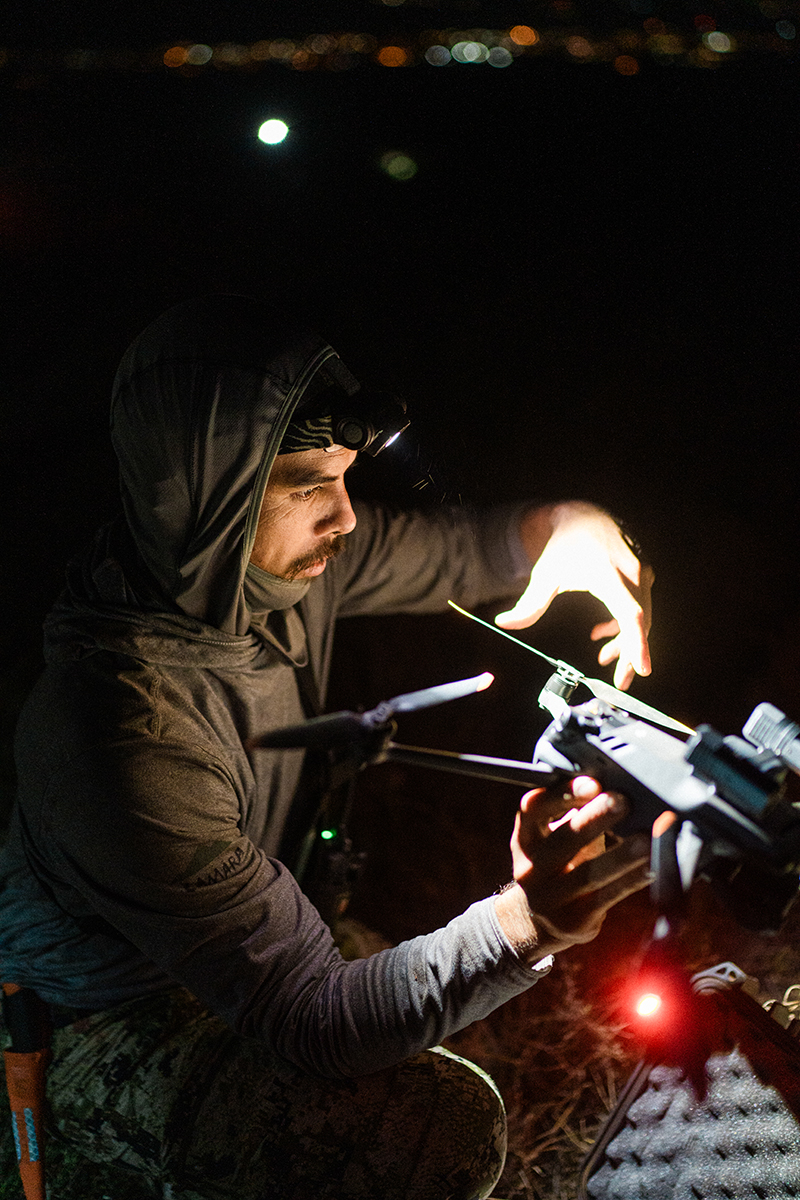
In late 2024, we launched something we'd been working toward for years: a full-time drone survey team.
Every 3 to 4 months, we now run a comprehensive FLIR drone survey across Maui's core deer range. What used to take six months to plan, fly, and analyze we can now do in a few weeks for a fraction of the cost with great people, AI analysis and real-time mapping.
|
|
We hadn't seen comprehensive data since 2021. For three years we were working with partial surveys and small data sets, learning and getting better, but always wondering about the bigger picture.
When our second complete data set came back, I felt some of the same things I'd felt in 2021: reassurance, relief, but in the place of disappointment was excitement.
|
|
|
|
Drone Commander, Keahi Camara, prepping for another night of surveys. Photo by Ryan Dewey.
|
|
This time our population estimates were only off by 3% and we wouldn't have to wait three more years for the next snapshot. More data was going to come back in a few weeks, then again and again, we would have actionable data we could use to help land owners make great decisions in real time.
We had planned appropriately, built appropriately. The math had been right all along. And we now had the tools to manage wild populations with something approaching the precision of livestock management.
|
|
2024 Impact: 15,619 deer harvested | Population modeling accuracy within 3-4% | Full-time survey team launched with FLIR + AI | Operational confidence achieved
|
|
2025:
HOLDING THE LINE & LOOKING AHEAD
|
|
As of mid-2025, we've harvested 9,535 deer and are on pace to finish the year at over 16,000 deer—the number required to balance Axis deer populations in the areas we help to manage.
For the first time in over 50 years, deer populations in our management areas are decreasing and we have all the tools necessary to continue that trend and to help create true agency for community stakeholders.
Reflecting on all the deer history we've learned and shared, Hawaiʻi has never seen more significant human-induced reduction in Axis deer populations. It is humbling to look back on all the incredibly hard work of so many amazing people who have committed to and believed in this mission and I am proud of the chapter we've added to this 150+ year history.
|
|
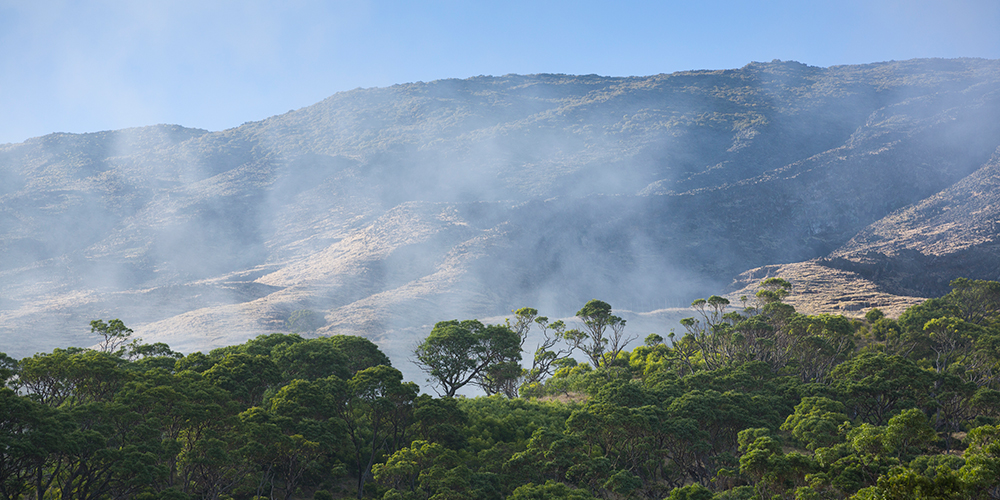
Ancient koa trees in the remnant forests of Nakula, Maui. Photo by Zach Pezzillo.
|
|
With over 200,000 pounds of venison shared with our community, more grass available for our ranchers and less pressure on our conservation areas, I believe there can be a real shift in how we think about long-term deer management on Maui.
|
|
2021 to mid-2025 Impact: 51,944 deer harvested | 2.23 million lbs of venison processed | 850,000 meals shared with community
|
|
To everyone who has been part of this journey—our team, our customers, our community—mahalo nui.
|
|
In Case
You Missed It
NEW TO OUR NEWSLETTER?
|
|
This is already our 23rd Volume of what has been described as the longest Newsletter ever. We have archived Volumes 1-22 for anyone who might love some backstories and extra long-form content.
|
|
|
|
|