
What We Talk About When We Talk About
Curing Meat
 Journal Series
BY IAN MILLER
Head of Narrative

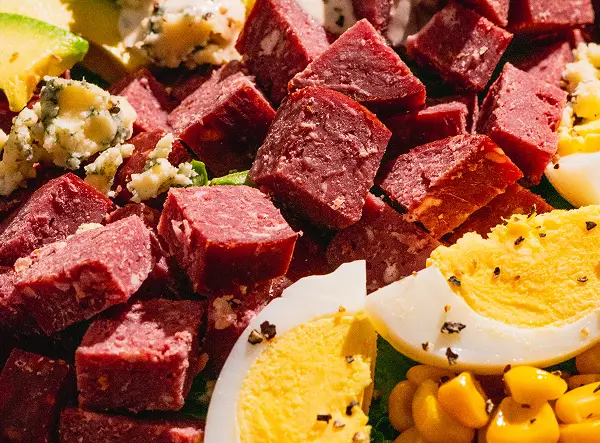
Cured meats—cold cuts, deli slices, charcuterie, sausage—are easy, versatile, widely recognized as delicious, a perfect partner to cheese and wine, and a fast way to get a healthy dose of protein.
Unfortunately, cured meats are often full of sodium phosphates, modified food starch, dextrose, artificial flavors, and other industrial tricks deployed for the purposes of shaping organic matter into perfectly sliceable geometries.
Somewhere between my desire for a great salami and my guilt over how it was likely made, I sometimes forget that curing meat was once a miracle. An ingenious innovation and solution to the challenge that meat, left to its own devices, can readily kill you. Salt, smoke, and time were the technologies that ancient civilizations used to preserve and safeguard the availability of meat across distances and seasons.
But today, most of the ready-to-eat meat that the world consumes is processed so thoroughly as to lose all essence—and much nutrition—of the animal it came from. Somewhere along the way, easier became the goal. Not better. Not wilder. Easier. As feed replaced forage and scale replaced care, something elemental was lost.
This is the story of a cured meat called Always Summer and the people who make it. The story, like Always Summer, will change your concept of lunch meat forever.

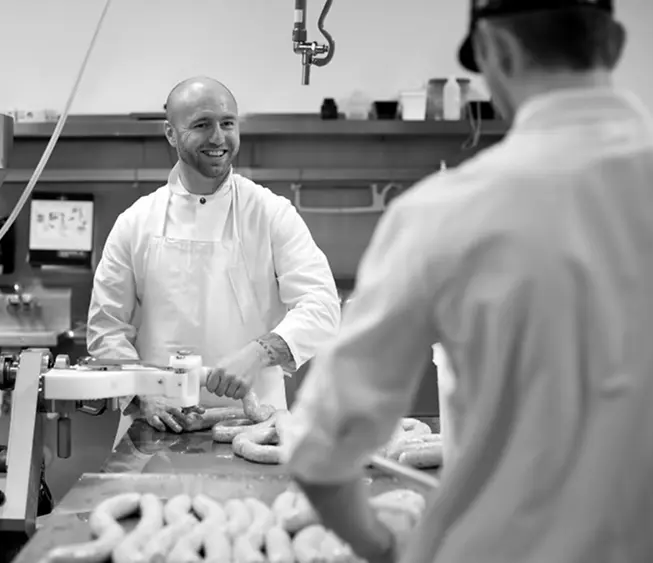
Elias Cairo grew up in a Salt Lake City household that butchered its own lamb and goats. First-generation Greek-American, Old World technique.
At twenty, he left for Switzerland to apprentice in classic European butchery and charcuterie, then cooked in Greece before landing in Portland, Oregon, where in 2009 he founded Olympia Provisions—Oregon's first USDA-certified salumeria—out of a 900-square-foot space behind a restaurant. The company has since won more than twenty Good Food Awards. It is one of the most decorated artisan producers of cured meats in the country.
Elias is also, by his own admission, deeply skeptical of the industry he works in.
When he first heard of Maui Nui, it sounded exactly like the kind of fabricated pitch that Elias distrusted. Never farmed. Always wild. Stress-free harvest of an invasive species. The story was ecological and nutritional. That managing the Axis deer population was good for Maui, and that the venison those animals produced was among the most nutrient-dense meat available anywhere. “I was instantly hackled,” he says with a smile.
“At Olympia Provisions,” he explains, “we don’t co-pack. We don’t private-label. We make a habit of saying ‘no’ a lot. So when Maui Nui’s request to make a shelf-stable product hit my desk, I said I wasn’t interested.”
But he couldn’t quite let the idea go. What if these people are real? he remembers thinking. What if these guys are really going out there and harvesting stress-free and doing all of this the right way?
When he finally sat down with Jake, something shifted. The conversation wasn't about marketing or positioning. It was about balance, nutrition, flavor, integrity, and the hard, unglamorous work of doing it right. Elias recognized it immediately, because it was the same work he’d spent his career trying to do.
Maui Nui became the first company Olympia Provisions has ever privately-labeled.

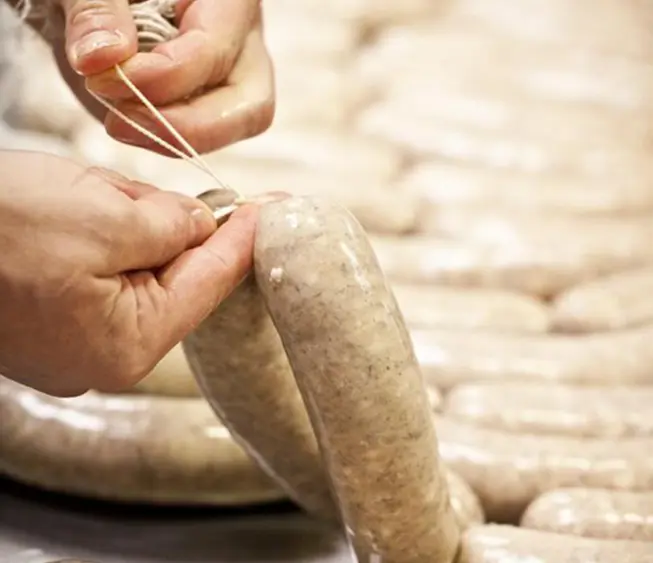
Elias and his team walked into the project assuming their technique would translate.
“I was like, ‘Oh, we got this, guys. Come on! Let’s throw a little meat science at it!” He laughs. “Those first batches came out so bad. So, so bad. Rubbery. Chewy. Grainy.”
The problem is biological and environmental.
Axis deer are not domesticated livestock. They are wild, free-ranging animals living in a variable environment on Maui, with a diverse, seasonally shifting diet. Axis venison is also 98% lean, radically leaner than the pork and beef that has defined centuries of sausage-making tradition.
That kind of leanness impacts everything.
The protein structures—the myosin, the muscle fibers—are denser and more reactive than those of a confined, farm-raised animal. Casings, which are designed to hold 20 to 30 percent fat, react differently when used with a fill that’s almost entirely lean muscle. Fermentation cultures calibrated for domesticated meat respond unpredictably to the mineral and amino acid profiles of wild game. Cook times shift. Humidity dynamics change.
The vocabulary that Elias had spent his career developing—from his Swiss apprenticeship through fifteen years of building Olympia Provisions—needed to be, in some ways, relearned.
“This is 100% lean muscle that's just been running around out there,” Elias says. “Everything about that says it's supposed to be chewy and dry.”
Elias reached out to his network in Europe, where curing wild game has a longer tradition. A German sausage maker named Andre came to work with the team and suggested something disarmingly simple. Take the mixture before fermentation or smoking, press it into a pâté pan, and steam it. Just see what the texture is.
“Holy shit,” Elias says of that moment. “It ate like a steak.”
Prepared with the simplest possible method, the result was unlike anything the team had experienced in conventional sausage-making. The texture was clean and dense—nothing like the compressed, homogenous product that industrial processing produces.
“The craft has to serve the material,” says Elias, “not the other way around.”

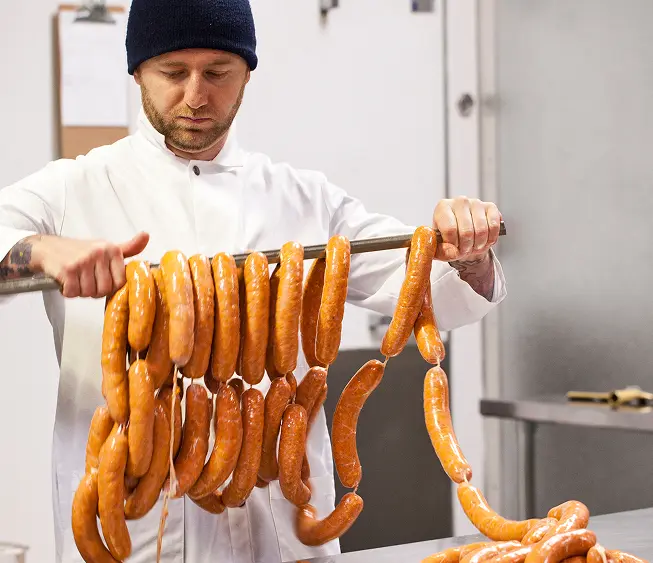
Thirty-eight attempts in R&D. That was the distance between Elias's first rubbery, grainy failure and a fermented, smoked, shelf-stable summer sausage worthy of wild Axis venison.
Somewhere in the middle of that process, he called Andy Hatch, a cheesemaker in Wisconsin—one of the best artisans in America—who had faced a similar crisis when he switched his production to pastured milk.
“It dawned on me,” Hatch told him, “and I think it's dawning on you right now. If you wanted it to be the same the entire time, every single time you made it, you would use confinement animals.”
Andy’s insight cuts to the center of what's wrong with industrial food production. Uniformity is achievable. You just have to remove everything that makes the animal alive. Control the diet. Eliminate movement. Standardize the animal, standardize the product.
Easier said than practiced. On the production floor, a fermentation cycle calibrated for 12 hours might stretch to 23. A 2% shift in fat content from one shipment to the next means stopping, recalibrating, verifying before proceeding. One entire batch of 300 units once failed to reach proper fermentation.
The consistency of Always Summer is real. Elias eats it nearly every day. So do I. But that consistency is achieved through vigilance rather than eliminating variation at the source.

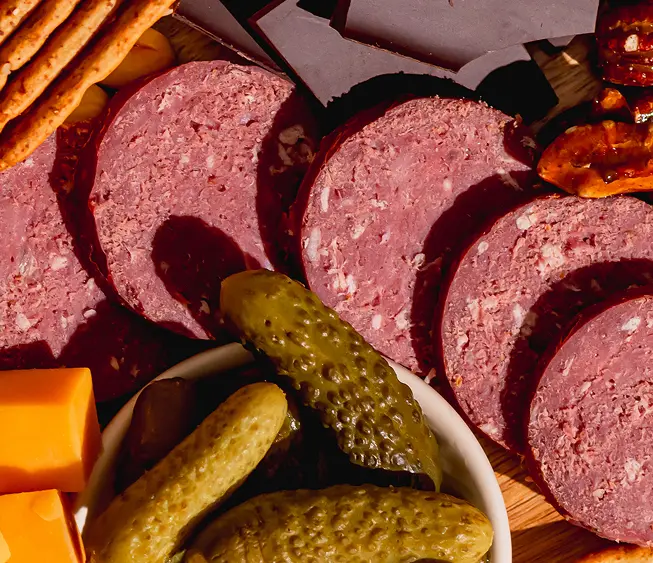
Always Summer is fermented, wood-smoked, and made from 100% wild-harvested Axis deer. 20 grams of protein and 110 calories per serving, with zero sugar and only seasoned with pink peppercorn and Hawaiian red sea salt.
But what makes Always Summer categorically different from conventional cold cuts is not any single attribute, but the relationship between all of them. The lean nature of wild venison shapes its nutritional profile. Fermentation adds depth and preservation without additives. Smoking adds flavor without masking the meat.
“I’ll put this against a pâté and a ham and all sorts of things, and it's crave-worthy. But it is genuinely nutritious. It's fermented. There's nothing in it that is bad. It's smoked with real wood. It has high-quality ingredients. It's an actual artisan product.” He pauses. “And somehow, in the environment of how people are eating now, it’s good for you? Unbelievable.”

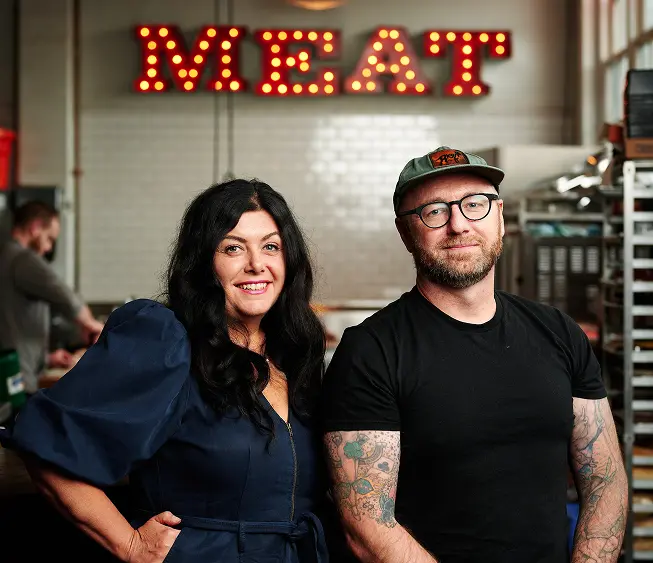
Elias has spent his career arguing that meat can be produced with integrity. That it can be good for the people who eat it and good for the systems that produce it. He has, by his own account, risked his company for this belief.
What keeps him up at night isn’t competition. It’s the brands that have learned to speak his language without doing the work. The companies that have watched the demand for better food grow and responded with better marketing. Consumers who are trying to make good choices are getting sold a story. That, to Elias, is the industry's real failure.
“I think if we're going to consume meat, it should be done the right way,” he says. “When you have something like what Maui Nui is doing—and you've spent your entire career trying to make things that are actually good—it matters.”
Thirty-eight rounds of R&D. A German sausage maker's steaming test. A cheesemaker's hard-won wisdom about variation. And a stubborn, shared insistence that wild meat deserves craft equal to its integrity.
Turns out the miracle was always the hard part.
__________
Elias, and everyone at Olympia Provisions, thank you. For saying yes when you almost didn't. For the thirty-eight rounds, the phone calls, the recalibrations, and the batches that failed. For bringing the same stubborn standard to our venison that you've brought to everything you've ever made. You didn't have to do this the hard way. You chose to. Mahalo nui.
Shop Meat Miracles