If we are doing our job well, harvesting should get harder over time. I just didn't think it was going to be this hard.


Jake
CEO/Co-founder
Aloha.
In January, I wrote to you that this year was going to be harder than the last.
Deer densities are down. This has always been the plan.
Our mission is to help balance Axis deer populations in the areas we help to manage, and if we are doing that job well, harvesting should get harder over time.
I just didn't think it was going to be this hard.
Here’s what happened.
—
JANUARY
Occurrences with no shot (ONS) started climbing.
An occurrence is defined as any time the UTV comes to a full stop, engine off, in an attempt to harvest a deer. We log each one, along with every shot taken per occurrence, which means we are also logging every ONS by default.
That number is the best indicator of “occurrence performance” and, ultimately, how deer are responding to what we do in the field.
My first thought was that execution might be slipping. Approach angles, noise, draw times, wind planning, proper light use, communication, etc. Any of these not working well could lead to an increase in ONS. We’ve seen it before.
But after several nights spent with each harvest team, we ruled them all out. The teams were on it.
Now, I know what you're thinking. You’re going to ask if we were tracking ONS in relation to moon illumination and perigee. We were. And numbers still weren't making sense.
—
FEBRUARY
ONS kept increasing, but now occurrences were starting to decline. Double trouble. We were seeing fewer deer, and the ones we were seeing weren’t sticking around. Harvest numbers started to drop, quickly.
—
MARCH
ʻUlupalakua Ranch, our home on Maui, recorded 18.39 inches of rain in two days against a 30-inch annual average, breaking a decades-old record. And it just kept raining.
We had to cancel 25% of our harvest days in March due to extreme weather.
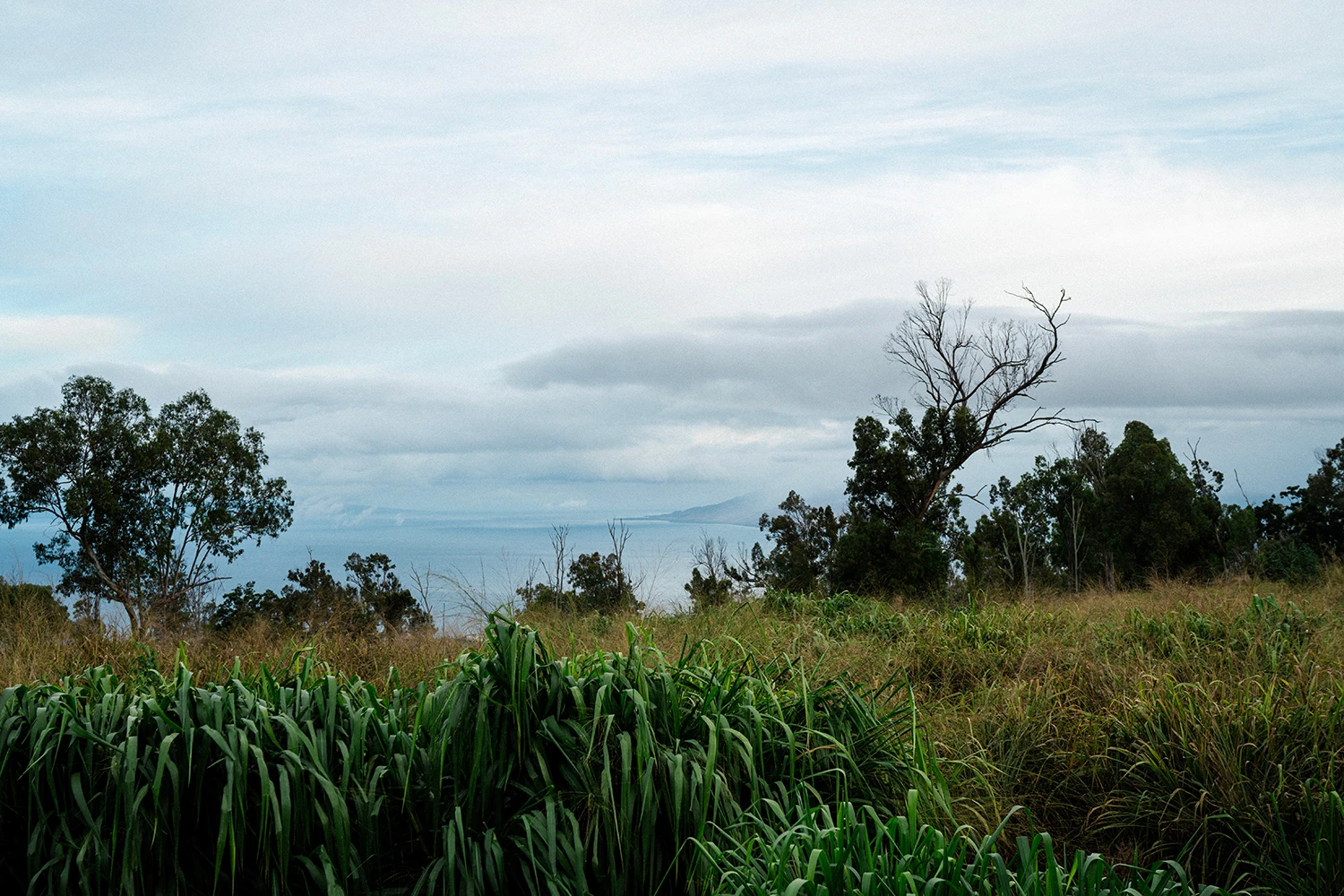
Oddly enough, we found a real moment to celebrate that month. Fewer deer means more grass, and more grass means more vegetation holding the soil. Through record-breaking rain in the areas we work, we saw very little soil runoff. Directly downslope, the ocean was blue.
And then the sun came out. Saturated soils and dew-laden evenings ignited grass growth we had never seen in over a decade of work Upcountry.

APRIL
Everywhere you looked, the grass was six feet tall, and it didn't matter if the deer were there. We couldn't see them. Harvest numbers kept falling.
For the first time in 18 years, I realized why our ancestors went to such lengths to enclose and control their food. The word livestock comes from old farm bookkeeping, where inventory ran in two columns. Dead Stock was the plows and the tools. Live Stock was the inventory that moved and breathed. Food you fenced in and could count on. We’ve never had that second column.
That month, we also finished our quarterly FLIR drone survey. I saw the email come through and skimmed the summary. Deer numbers had gone up slightly. A direct kick in the shins, like when you walk into a trailer hitch in the dark.
I started poring over the data, ran a distribution analysis, and the answer popped off the page.
They had adapted. With lots of feed available almost anywhere, they had adjusted their home ranges to be just outside of our harvest areas. They were still there, but just out of reach.
Harvesting (ante-mortem inspection) with the USDA has to be done from a vehicle, which means we are most often restricted to ranch roads because of Hawaiʻi’s varying terrain, leaving lots of ranch areas unreachable for harvests.
I took the rest of April to think. Something big had to change.
—
MAY
We made the decision that could have been the end.
As often as we can, we go back to first-principles thinking. So if the deer were out of reach, we had two options:
1—We move to get within reach. Or, 2—they move to get within reach.
We considered everything—bulldozers for new roads, rock crawlers, a scissor lift on a flatbed so we could shoot from twenty feet in the air, even hover cars (VTOLs). The list was long.
But what we never considered was breaking our promise that these animals should be truly wild till the moment of harvest. No pens, no traps, no baiting, no herding, no trailers, no fences.
And then the solution presented itself, like it had been waiting for the right moment.
Three years ago, Kuʻu wrote our kāhoa, He Mea Aha Ka ʻAi. It's what we do before every harvest, to remember what it all comes back to. Questions called out and answered back, the same answer every time. We stand in a circle and chant it.

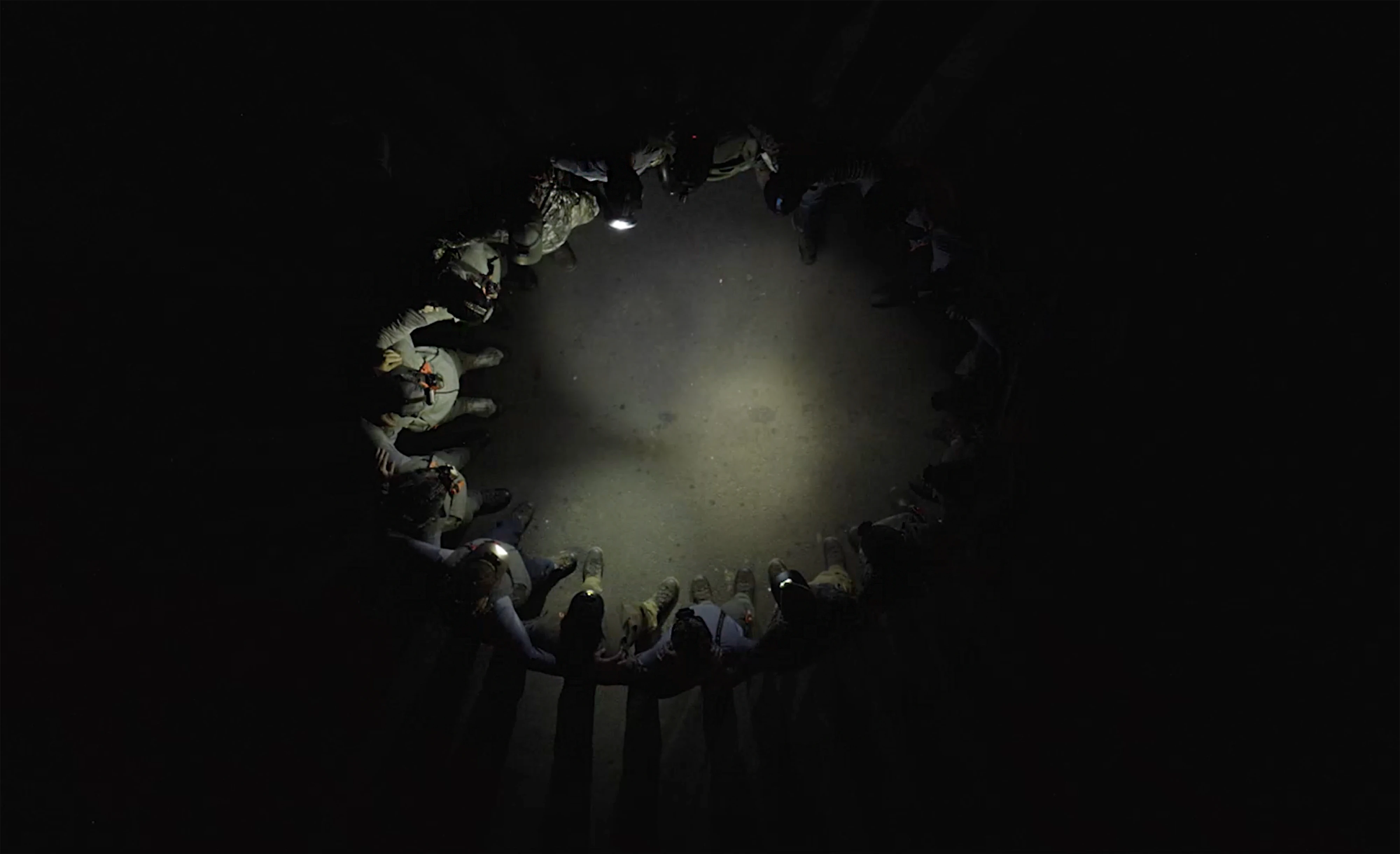
The kāhoa asks fourteen questions. To simplify, we chant three—lines one, three, and five.
He mea aha ka ʻai? He ʻai.
He mea aha ka hana? He ʻai.
He mea aha ka hānai kānaka? He ʻai.
What is food? Nourishment.
What is work? Nourishment.
What is feeding others? Nourishment.
It was my turn to lead one night in May, so I looked up at the poster on my office wall to practice pronunciation, like always. For some reason, this time I read line three and then didn't skip line four.
He mea aha ka hana? He ʻai.
He mea aha ka maha? He ʻai.
What is work? Nourishment.
And the resting after? Nourishment.
And there it was. Just waiting. We needed to change everything. We needed to rest.
For four years we had harvested almost every night, running two full alternating teams working 7 nights on and 7 nights off. We never stopped.
Now we were going to go from two teams on a 7-on/7-off schedule to one big team on a 7-on/3-off/6-on/14-off schedule all tied to the moon and the darkest nights of the month.
If our thinking was right, the 14+ nights off would create a rest period that would allow the deer to re-establish home ranges across their preferred habitat, moving them within our reach.
If we were right.
If we were wrong, we would be concentrating operational risk across 13 days of the month instead of 26, and our business and mission would likely collapse.
We decided to change everything, including adding line four back into our harvest chant. We decided to rest.
—
JUNE
Occurrences increased slightly, ONS decreased slightly, and harvest numbers went up by 10%. A hopeful sign.
And we rested.
—
JULY
We had our best month since January, getting back to harvest numbers that almost balanced populations.
And we rested.
—
AUGUST
We are having our best month in over a year, achieving numbers that balance populations. We even had a little extra Holo ʻAi ground, sent alongside personal allotments the team chose to share with community recovering from the recent hurricane.
And we are resting.
Mahalo to our team and partners, who have been willing to constantly adapt to see this mission through. And now, without forgetting to rest after.
Until September.
Ā hui hou,
Jake Muise
CEO & Co-Founder