Ok, long story long. Nīoi. If I am honest about my earliest memories of nīoi, the Hawaiian chili pepper, I would have to tell you that they are searing. That they are burned in.



Ku'ulani Muise
Brand Lady & Co-Founder
Aloha,
Ok, long story long. Nīoi.
If I am honest about my earliest memories of nīoi, the Hawaiian chili pepper, I would have to tell you that they are searing. That they are burned in.
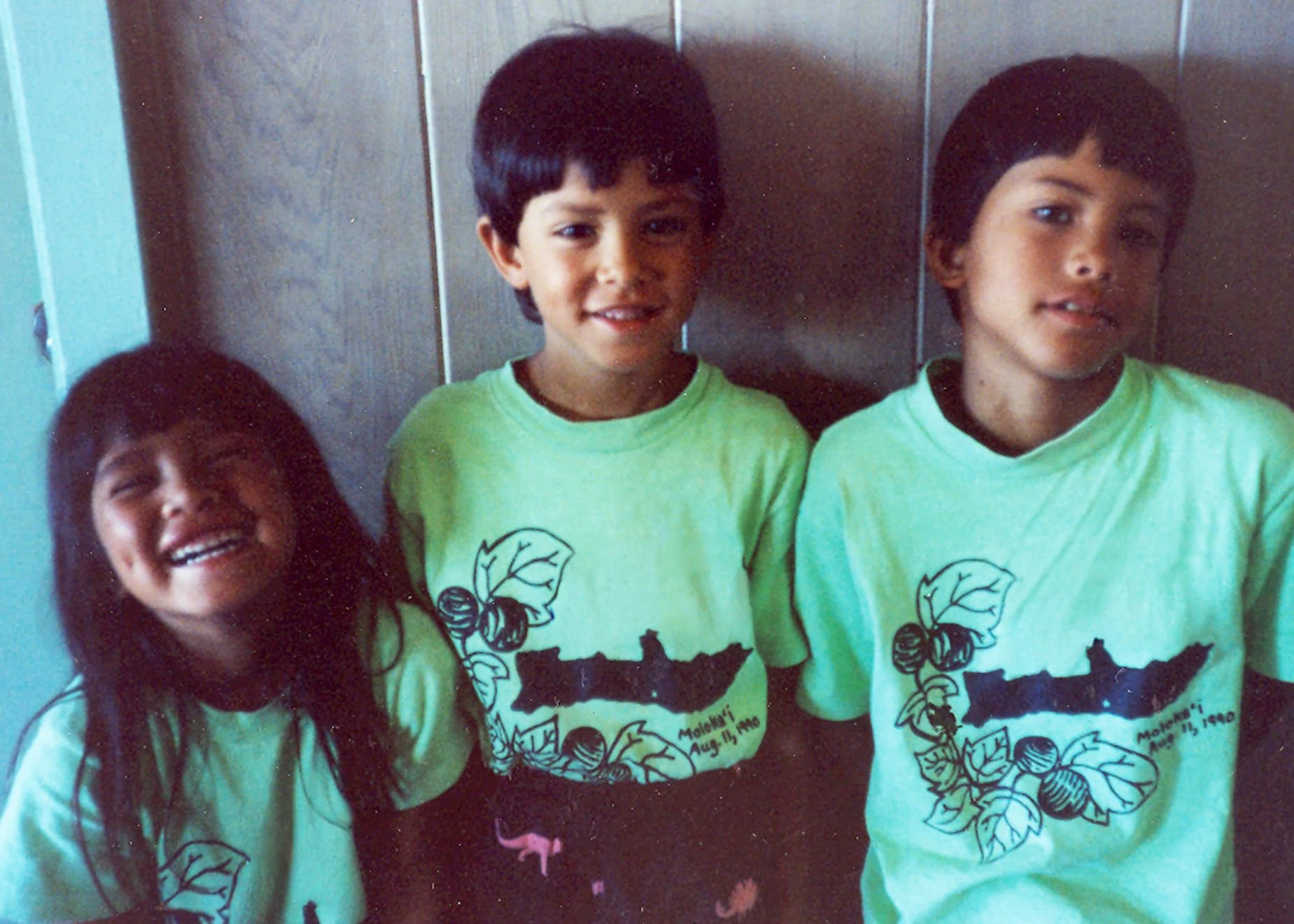
The very first is of my older brother standing in the kitchen, 7 years old maybe, his cheeks are being squeezed between my mother's beautiful piano fingers as she forces a spoonful of chila pepa water into his mouth. He has said dammit, so he has it coming. I can still see him lurched over the kitchen sink, his potty mouth wide open under the full blast of the tap.
“How rude!” he says when he finally jumps down, a Full House/Stephanie Tanner reference still lodged in my memory 35 years later.
Another memory.
One of those 1960s retractable pendant lights pulled down low over the kitchen table while my grandma feeds us a too-early dinner. A big pot of stew. Beef, Iʻm afraid. My other older brother, trying to mimic her by picking a nīoi out of the little bowl on the table, nibbling off the tip and attempting to squirt it over his stew and rice.
He misses. Gets his eye instead. And then the screaming.

And then when I get through those visceral ones, the quieter ones begin to arrive.
My grandma’s hands picking those small, bright red bodies of fruit off her prolific chila pepa bush in the shade of her paperbark tree.
The omnipresence of chila pepa water in the icebox, those little nīoi bobbing around in my dad’s bottle collection of all the condiments, salad dressings, and shoyu gone by.
To gather all of these up is to realize that nīoi has surrounded me (and every Hawaiʻi kid) all my life.
—————
But Hawaiian chili peppers aren’t actually Hawaiian.
Nīoi names a storied (even magic) relic tree species, Eugenia koolauensis, endemic to Molokaʻi and Oʻahu, now only found in the Koʻolau and Waiʻanae Ranges. Its pea-sized fruits are edible, faintly sweet, and range from yellow, to bright orange, to a vibrant red.
Now, the nīoi with which we’ve spiced up our foods for the past two centuries is another kind of plant entirely. The two share a name and almost nothing else. The elder is a myrtle. The newcomer, a nightshade. While the first nīoi seeds probably arrived in the gut of a single bird on a journey-quest of 3,000-plus miles across the Pacific, more than three million years ago, the second arrived in the belly of a 19th-century ship bound for the garden of one colorful and protean Don Francisco de Paula Marín—a Spanish navy deserter turned befriend-er of captains, traders, pirates, and kings.
Marín (dubbed Manini by the locals) rose in favor in the court of Kamehameha I and, in 1810, was allowed to build one of the first stone homes along Honolulu’s waterfront. From the churn of the market wharf, Marín—translator, military advisor, and budding agriculturalist—asked the same thing of every ship that anchored: something to plant. Seeds, roots, cuttings, whatever would take. He put Hawaiʻi's first grapevines in the ground, its first pineapple, its first mango and orange. And somewhere in all that exchange, a little wild chili pepper from the Americas went into the soil.

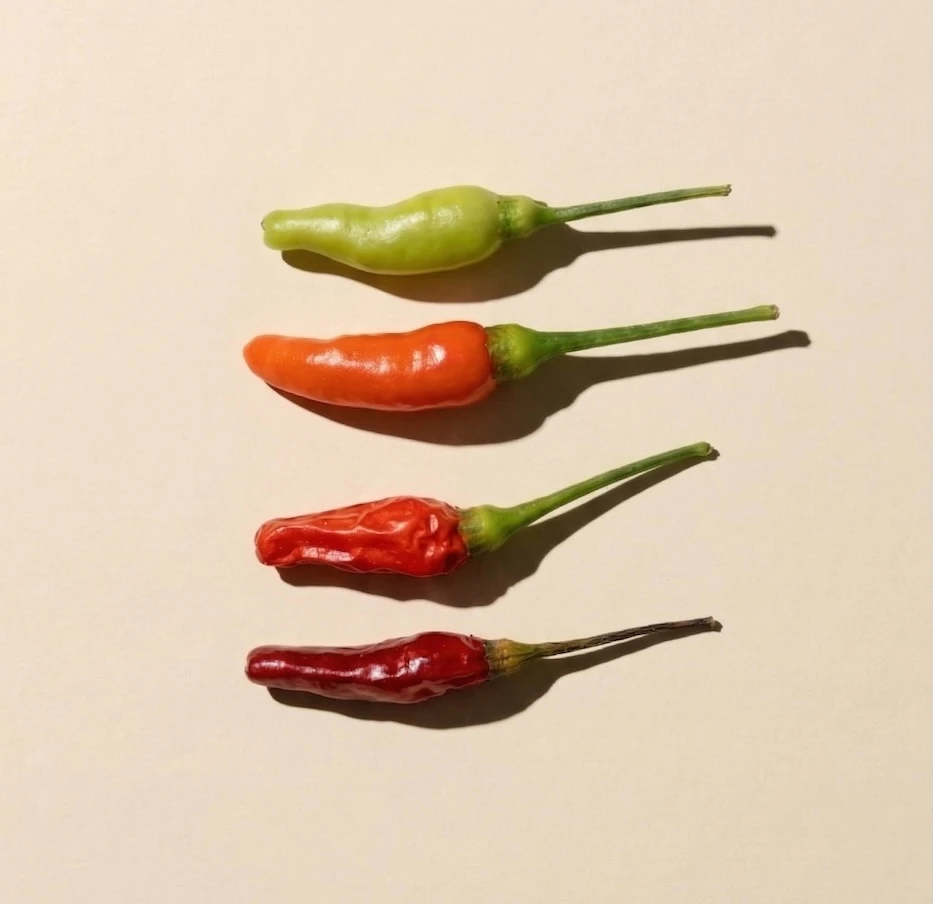
And it took. It bore small bodies of fruit that ripened from yellow, to bright orange, to a vibrant red. It was named nīoi, too.
—————
So what does it taste like? And how hot?
Nīoi opens bright and almost fruity, with a sweetness you wouldn’t expect from something so small. Then comes the heat: sharp, savory, and slow to build. A heat that lingers. On the Scoville scale, nīoi lands somewhere between 50,000 and 70,000 units. Hot, by any measure, though modest next to the habanero (250,000 SHU) or the bhut jolokia, which tops a million. Nīoi is not trying to win that contest.
And that’s the whole point. It was never about finding the hottest thing to bring into the kitchen. It’s about what nīoi does for everything around it. It doesn’t bury the fresh fish or the pot of stew (venison, I hope). It brightens them. Lifts them. This is the pepper we adopted. The one we gave a name of our own. The one we brought into our cooking, our medicines, even our parenting.
Whether the memories are of the visceral type or of the very fondest, nīoi has planted itself firmly in 200 years of tradition here—piled in a tiny dish next to the poi bowl, stirred into everybody’s dad’s chila pepa water, grown in riots of red in all the little kitchen gardens.
When we set out to make a Spicy stick, it was always going to be nīoi.
Whatever you decide to call my new favorite flavor—Spicy, Chila Pepa, Nīoi—I cannot even wait for you to try it.
Aloha,
Kuʻulani Muise
Brand Lady & Co-Founder