For years we wanted to try fermentation and for years every expert told us the same thing. With meat this lean, real fermentation would not work. The stick we wanted was impossible to make. Until we asked Elias Cairo.



Jake
CEO/Co-founder
Maui Nui contains less than 2% fat. That is one of the reasons it feels and tastes so clean.
But protein that lean makes it really hard to turn into a perfect meat stick.
When curing a lean stick, the muscle fibers in the meat contract and squeeze the moisture right out. What you end up with is something dry. Crumbly.
The common industry fix is phosphates. They bind the protein and help a lean stick hold moisture, sometimes with added water for yield. On a label you see them as Sodium Phosphate, Sodium Tripolyphosphate, or Sodium Hexametaphosphate. They are hard to pronounce, but they do the trick. The problem is, the body absorbs them up to 2x as readily as naturally occurring phosphates. We are still learning how harmful that level of intake can be.
That was never going to be an option for us.
And neither was adding fat from another animal.
—————
There were really only two paths we were willing to take to make a shelf-stable stick. Both work by dropping the pH of the meat enough that harmful bacteria cannot grow inside it.
One is citric acid. The same natural acid that gives lemons and limes their tang. Added directly to the meat, it drops the pH, allowing us to produce a stick in under a day. Three of our sticks are made this way and we are proud of them. It is a beautiful way to make a meat stick.
The other way is natural fermentation using live bacteria, the same kind that turns milk into yogurt, or cabbage into kimchi. These bacteria eat sugars, produce lactic acid, and drop the pH.
But that process takes significantly longer.
—————
For years we wanted to try fermentation and for years every expert told us the same thing. With meat this lean, real fermentation would not work. Fat is what protects the muscle through the days a stick needs to ferment. Without it, the bacteria still do their job, but by the time they finish, the meat has dried up and fallen apart.
The stick we wanted was impossible to make.
Until we asked Elias Cairo.

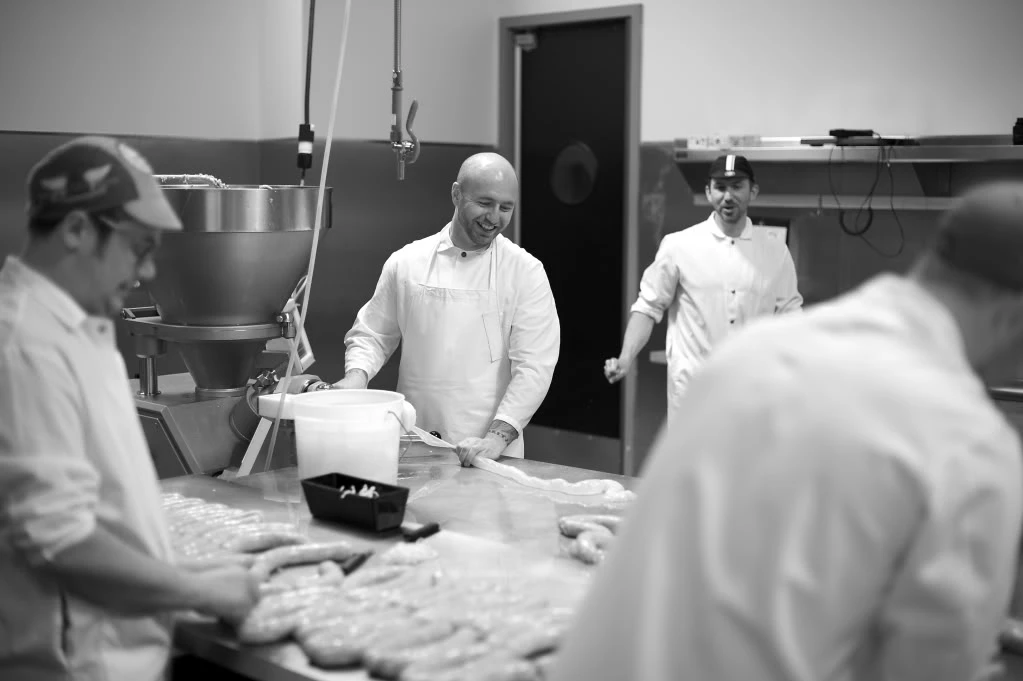
Elias started Olympia Provisions in Portland, Oregon. He thinks about meat the way I think about harvesting. Take a complex, highly technical system and make it work so well that it looks simple.
He told us he would try.
Almost a year later, he asked us to come visit and while walking the floor with him, he turned to his team and said, "Let's not go fast, my friends."
That line stuck with us.
For Spicy, it wasn’t going to be fast. For Spicy, it would have to take three days.

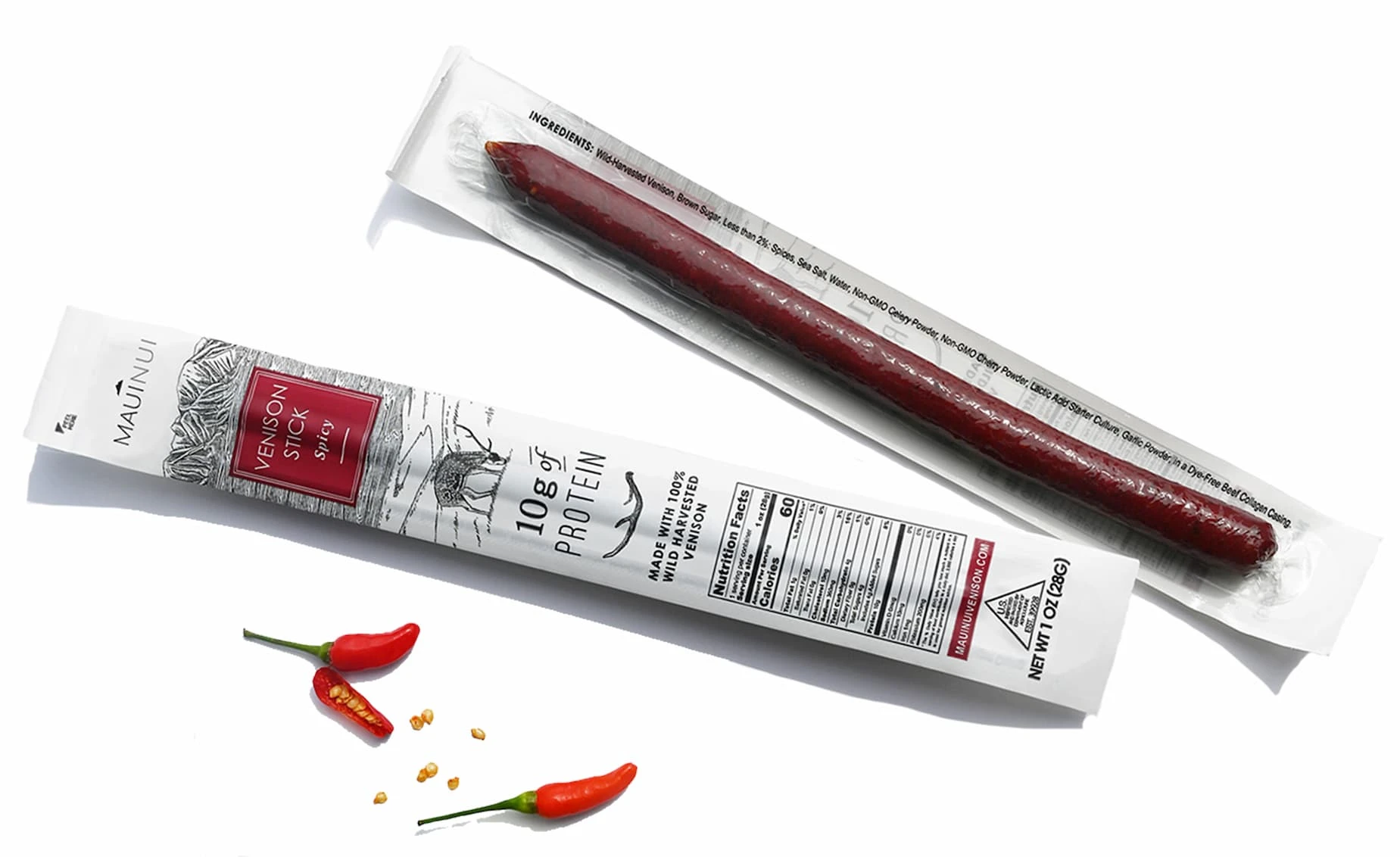
Three full days of real fermentation. Live bacteria in the meat, slowly eating the sugars, dropping the pH, building the flavor in their own time. After that—hours of smoking with real chips of hickory, apple, beech, birch, and maple. No injection. No liquid smoke.
What Elias figured out, after ten months and more than 30 rounds of R&D, is that wild red meat made this way wants to be left alone. Fermented slowly. Smoked slowly. Brought up to temperature gently. And then, at exactly the right moment, the moisture releases on its own. The stick holds itself together. No phosphates. No added fat. Just time.
At the end of the tour, Elias picked up a just-finished Spicy stick, broke it in half, and shared it with us.
"This is basically a perfectly prepared steak," he said. "Made in reverse."
He smiled.
Elias and I believe the same thing. That oftentimes the hard way, the slow way, the long way, is the right way.
Hui hou, until next time,
Jake Muise
CEO & Co-Founder